Diagnosis is the first step to care for bleeding disorders
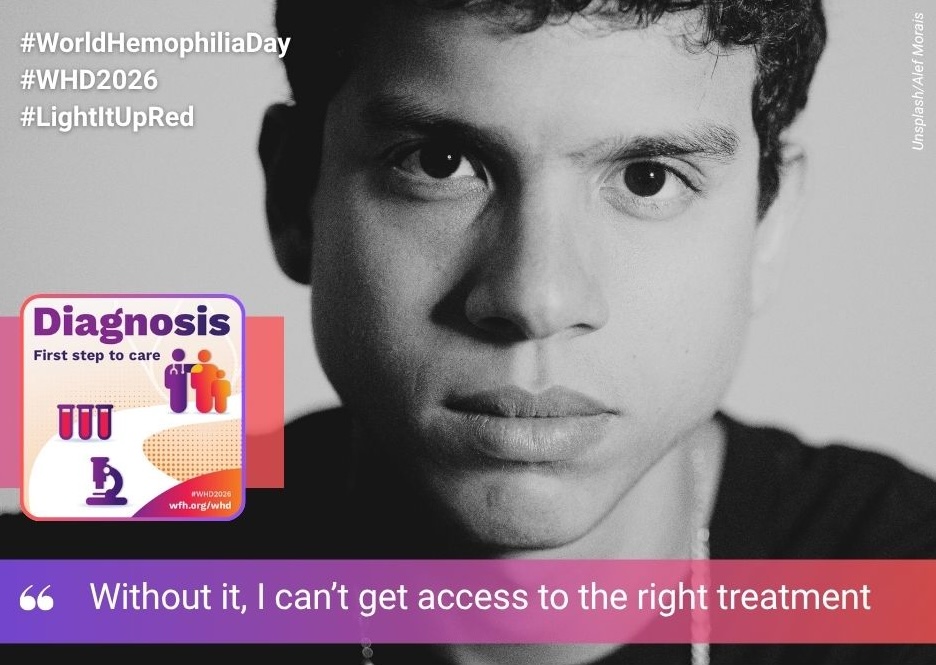
The theme for World Hemophilia Day 2026 is Diagnosis: first step to care.
It seems quite obvious – you need a diagnosis to access the treatment and care you need for any condition. Yet the World Federation of Hemophilia (WFH) estimates that, globally, over 75% of people with a bleeding disorder remain undiagnosed.
A call to action on diagnosis
Living with a bleeding disorder can have significant impacts on health and quality of life. Living with an undiagnosed bleeding disorder increases these impacts further and can be a threat to life.
Speaking ahead of this year’s World Hemophilia Day, Cesar Garrido, President of the WFH, said that barriers that delay or prevent the diagnosis of bleeding disorders have led to “unacceptable low diagnosis rates” for haemophilia. He went on to highlight that the challenge of securing a diagnosis is “even greater for people with von Willebrand disease, rare bleeding disorders, and for women and girls with bleeding disorders.”
Improving rates of diagnosis – and therefore access to the right treatment and care – relies on improving the skills of healthcare professionals and laboratory capabilities. In a call to action, Mr Garrido challenged the global community “to unite in advocating for stronger diagnostic capabilities everywhere – because without diagnosis, there is no treatment, and without treatment, there is no progress.”
Delayed diagnosis in Africa
In its report on the 2024 Annual Global Survey, the WFH estimates that only 8% of people living with haemophilia in Africa have been diagnosed. These low levels of diagnosis are familiar to us through our contact with friends and colleagues in Uganda and Nigeria – who also tell us that improved diagnostic capacity is essential for improving care.
Uganda — Haemophilia
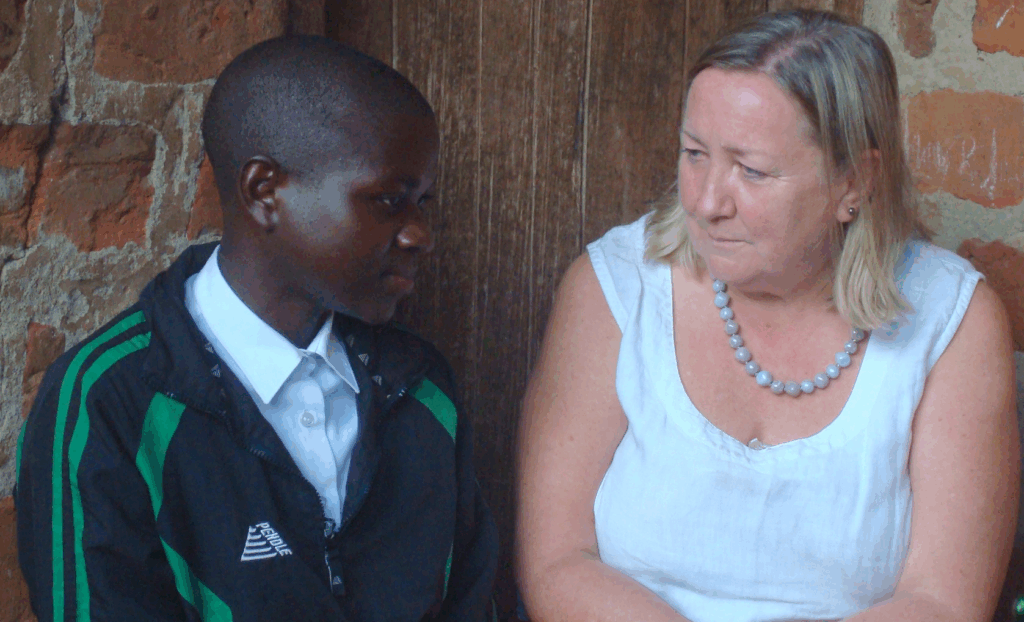
Morris Okello from Uganda has severe haemophilia B. Despite a history of traumatic bleeds complicated by an evident (but undiagnosed) underlying condition, he wasn’t diagnosed until his early teens. Even then, his diagnosis involved the support of a hospital in the UK as facilities for the testing that was needed simply didn’t exist in Uganda.
Inspired by Agnes Kisakye of the Haemophilia Foundation of Uganda, Morris is now a passionate advocate for improving haemophilia treatment and care in his country. “We need to coordinate, to come together as one,” he told us, “because together we can do great things.”
For Agnes, improving diagnostic capacity and access to care in Uganda is as important as securing a consistent supply of treatment. Even where facilities exist, many African countries are unable to measure assays for Factor VIII or Factor IX. “We need to decentralise diagnostic capacity through strengthened peripheral treatment centres,” she says.
Nigeria — Glanzmann thrombasthenia
Similarly to Morris Okello, Sherah Chiazom Ogobuchi-Odo from Nigeria was diagnosed with Glanzmann Thrombasthenia as she entered her teenage years. Following the onset of her periods, her bleeding became unmanageable – but again, diagnosis was made possible through the involvement of healthcare professionals abroad, this time in the United States.
Once Sherah was formally diagnosed, she was able to access treatment that has helped. She believes that making diagnostic testing available in Nigeria would bring significant improvements for people living with bleeding disorders like hers.
Women and girls
Even in countries with good diagnostic capacity, delayed diagnosis of bleeding disorders is still in issue – particularly for women and girls.
Our Cinderella Study surveyed almost 300 UK women affected by a bleeding disorder and found that many were not diagnosed until after giving birth to a child who was subsequently diagnosed. Many of them had experienced symptoms such as heavy periods for years – and many of them were told or simply accepted that it was ‘normal’ and ‘just part of being a woman’.
The study found:
Lack of awareness about diagnosing bleeding disorders in women causes delays in referral and diagnosis, and contributes to the negative psychological and social impact of living with these disorders. [1]
First step to care
Without diagnosis, people with a bleeding disorder can’t access the right treatment.
Without diagnosis, healthcare professionals won’t know how best to care for them.
And without diagnosis, many people with a bleeding disorder – and particularly women and girls – may accept their symptoms as normal.
References
1. Khair K, Pollard D, Steadman L, Jenner K, Chaplin S. The views of women with bleeding disorders: Results from the Cinderella study. Haemophilia 2022. doi: 10.1111/hae.14514.
About the author
Kathryn Jenner is Communications and Community Manager at Haemnet Ltd.