Volunteering to improve bleeding disorders care – International Nurses Day 2026
On International Nurses Day 2026, who better to talk about empowered nurses and their role in improving bleeding disorders care globally than WFH International Healthcare Volunteer Award recipient Dr Kate Khair?
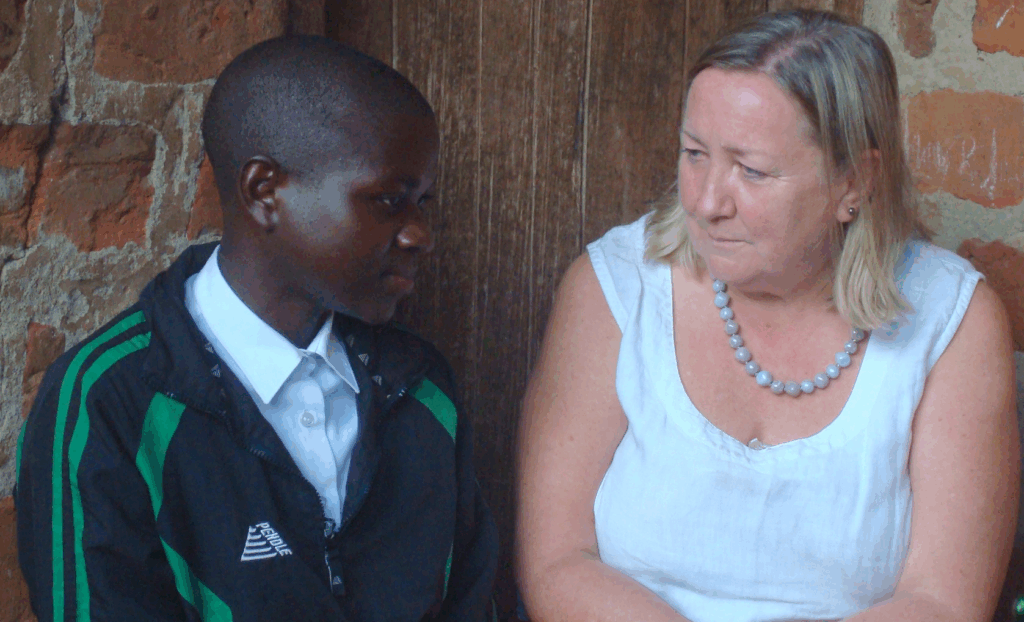
At this year’s World Federation of Hemophilia (WFH) Congress, Dr Kate Khair was presented with a WFH International Healthcare Volunteer Award for her dedication to improving care and advancing the role of nurses in bleeding disorders care.
For International Nurses’ Day 2026, we asked her about the background to her award, the experiences that motivated her as a volunteer, and the difference that nurses make in improving bleeding disorders care worldwide.
A particularly special award
Well known throughout the bleeding disorders community as a nurse, educator and champion of multidisciplinary care, Kate says she feels both humbled and honoured to receive a WFH Volunteer Award. It feels particularly special as it recognises her role in improving bleeding disorders care ‘on the ground’, in parts of the world where diagnosis and access to treatment and care often remains tricky.
“The WFH award is specifically for my role in volunteering, both going out and running nurse education programmes with the WFH, but also when I was still in practice at Great Ormond Street Hospital and we did a WFH twinning programme in Uganda,” Kate explains.
“But the very first place that I went, actually, was Bangladesh, back in around 1992, I think. I just happened to be in Bangladesh, and while I was there, I thought, well, let’s go see what we can do in terms of what is the haemophilia care there like.”
From Bangladesh to Uganda
Witnessing haemophilia care in Bangladesh was a key moment in Kate becoming a volunteer nurse educator. She describes meeting the parent of a young person with haemophilia who had set up a support group in their home.
“There was nothing else,” she says. “Diagnosis was mostly for people who were diagnosed outside of Bangladesh and there was very little access to treatment. I think that’s when it first struck me that we needed to do something, because there are clearly lots of people with haemophilia, they just aren’t diagnosed – yet alone all the other bleeding disorders.”
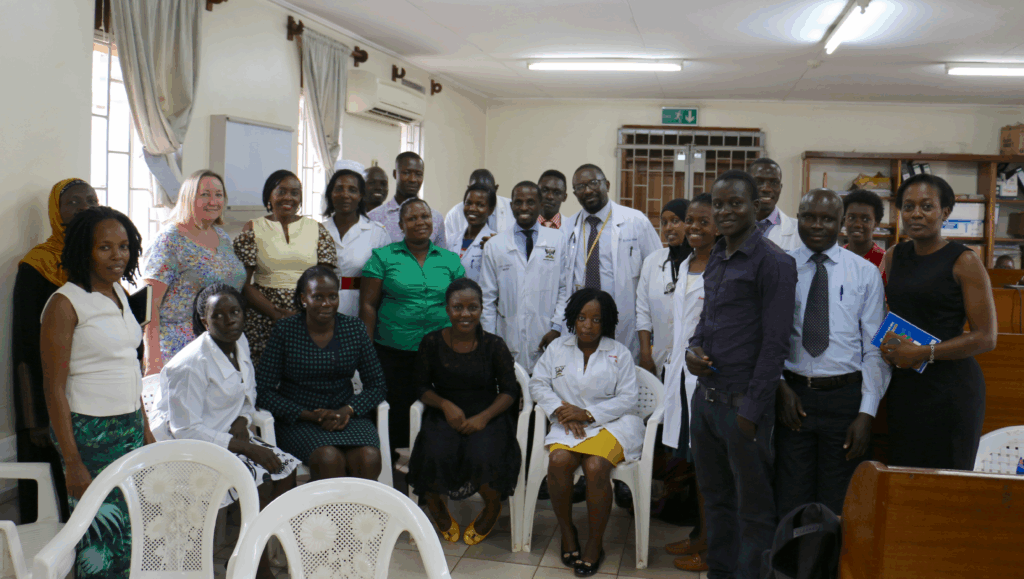
When the haemophilia centre at Great Ormond Street was twinned with a hospital in Kampala, Uganda, Kate found the situation for bleeding disorders care shared similarities, albeit in a very different part of the world. At that time, Kampala was home to the only hospital in the whole of Uganda to offer haemophilia care.
Kate and her colleagues visited several times and also hosted a Ugandan doctor in London for six months. She emphasises the importance of increasing awareness of haemophilia and other bleeding disorders among a broad sweep of healthcare professionals: “We did a lot of teaching, training, education, not just of the people in the hospital, but we went to the medical school, the nursing school, and met lots of people.”
Ongoing African connections
Kate’s volunteering work as a bleeding disorders nurse-educator in Africa has taken her to Sierra Leone, The Gambia, Nigeria, Zambia, Malawi and Kenya – and her connections with doctors, nurses and patient advocates in Uganda have continued over decades.
“I’ve been out to Uganda a few times and run diagnosis camps,” she says. “It’s amazing – on the radio, they put out these calls saying what we’re doing, and literally hundreds of people come. You can then screen them and identify people that have bleeding disorders. They don’t all have haemophilia, but many of them do have bleeding disorders.”
Kate is clear that improving diagnosis rates and care for bleeding disorders in parts of the world where it’s limited all starts with education.
“It’s about recognition,” she continues, “And for recognition, you need educated healthcare professionals. Then it’s about diagnosis. Only then is it about treatment. It’s about how you get the treatment out to where the children or adults are, and then whether there are local hospitals that are prepared to treat them. So, it’s whole education, training, support of everybody – not just the healthcare professionals, but also the families.”
Family inspiration
Kate speaks about how drawing family trees can be incredibly helpful in helping to identify more individuals with bleeding disorders. Families she has met while volunteering have also inspired her to think outside the box to help facilitate access to care.
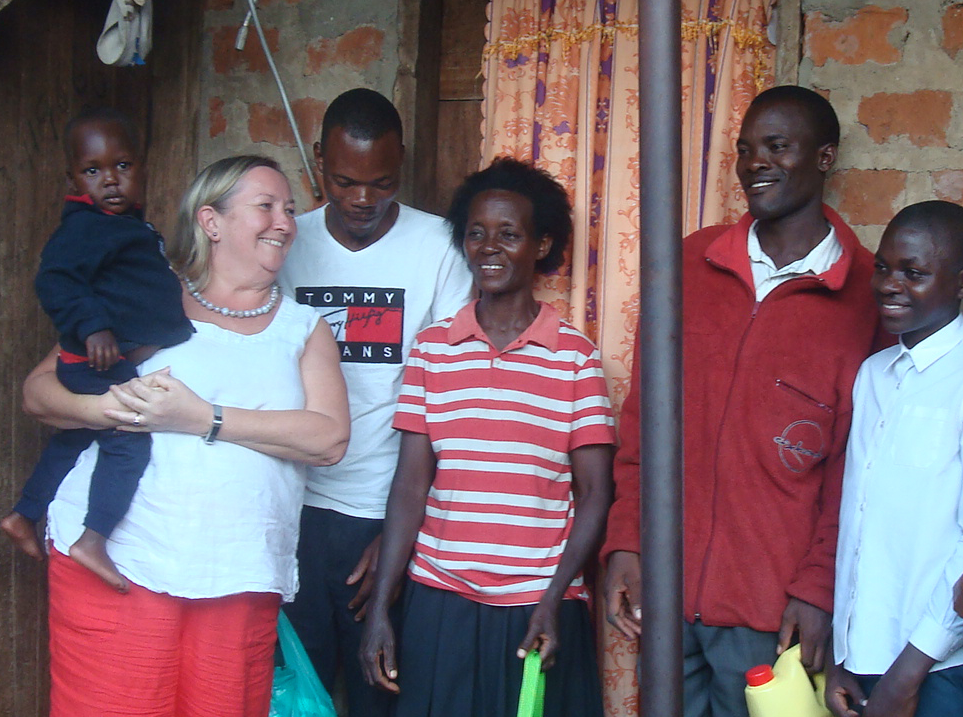
Thinking back to one of her visits to Uganda, she remembers meeting a large family including two boys known to have haemophilia, in a village 50 kilometres from Kampala, where they were treated.
“They lived in a little hamlet of half a dozen houses,” says Kate, “No electricity, no water, just a mud house with a mud floor.” The boys were unable to go to school as it meant walking five miles – something most Ugandan children would happily do, but which the boys couldn’t physically manage due to the impact of bleeds into their joints. Getting to Kampala for treatment along dirt roads and tracks with no transport of their own was almost impossible.
Outside the box
As a nurse, Kate’s first instinct was to make the children more comfortable. “You think, ‘Oh, he’s got a terrible knee, and it’s fixed and it’s flexed, and all that he needs is a pillow to put underneath his knee to support it.’ But you go into the house and they don’t even have beds. They were literally sleeping on mats on the floor, so there is nothing that you can actually offer at first glance to make it better for them.”
The solution?
“We bought them a water tank!” says Kate. “It rains a lot in Uganda, so we bought a massive water tank for them, which meant that they could always have water. But then that they could sell that water to the other people in their little hamlet to water their vegetables, which then gave them enough money to be able to get on a little motorbike –boda bodas, they’re called – which would take them to the main road where they could get on a bus to get to the hospital for treatment.”
Knowledge is power
The theme for International Nurses Day 2026 is ‘Our Nurses. Our Future. Empowered Nurses Save Lives.’ With this in mind, what difference does Kate think nurses can make in improving bleeding disorders care around the world?
“I don’t think we should even be asking ‘Can they?’” says Kate. “I think we should be saying they are.”
“Nurses might know the families where the mum of a family with haemophilia is having another baby, so can make sure that baby gets screened. Circumcision happens a lot in many African countries, so it’s important that the baby is tested before he gets circumcised and comes in and is bleeding. Knowledge is power, and it’s about nurses knowing who those people are and bringing them in.”
Nurses make a difference
“The whole education bit is really the role of the nurse, too,” Kate continues. “Wherever you are in the world, nurses are educating and supporting patients and families to recognise bleeding, to know what to do when they are bleeding, to self-treat if and when you’ve got access to treatment, and to know about managing risk.”
“Bleeding disorder nurses have a really important role, and that’s something that you see when you go to WFH Congress. You see nurses from all around the world who are making a difference where they come from. They might not be thinking about it, they might not all be well known, but they’re making a difference wherever they are.”
About the author
Kathryn Jenner is Communications and Community Manager at Haemnet Ltd.
Dr Kate Khair is CEO and Director of Research at Haemnet Ltd.